

Boost Your Health: Protein Needs for Women Over 35
If you’re a woman over 35 trying to feel stronger, more energized, and in control of your health, protein deserves a front-row seat in your nutrition. Yet, many women aren’t getting enough or aren’t spreading it out in a way that truly supports their body. Let’s break down why protein matters more as you age, how much you actually need, and how to make it work in real life.
Why Protein Becomes More Important After 35
As we move through our 30s, 40s, and beyond, our bodies naturally begin to lose lean muscle mass. This is a process called sarcopenia. Hormonal shifts, especially changes in estrogen, can also impact how efficiently we build and maintain muscle. Getting enough protein helps preserve muscle, support energy, and keep your metabolism working for you, not against you.
This matters because muscle plays a key role in:
- Metabolism
- Blood sugar balance
- Bone health
- Strength and injury prevention
How Much Protein Do You Actually Need?
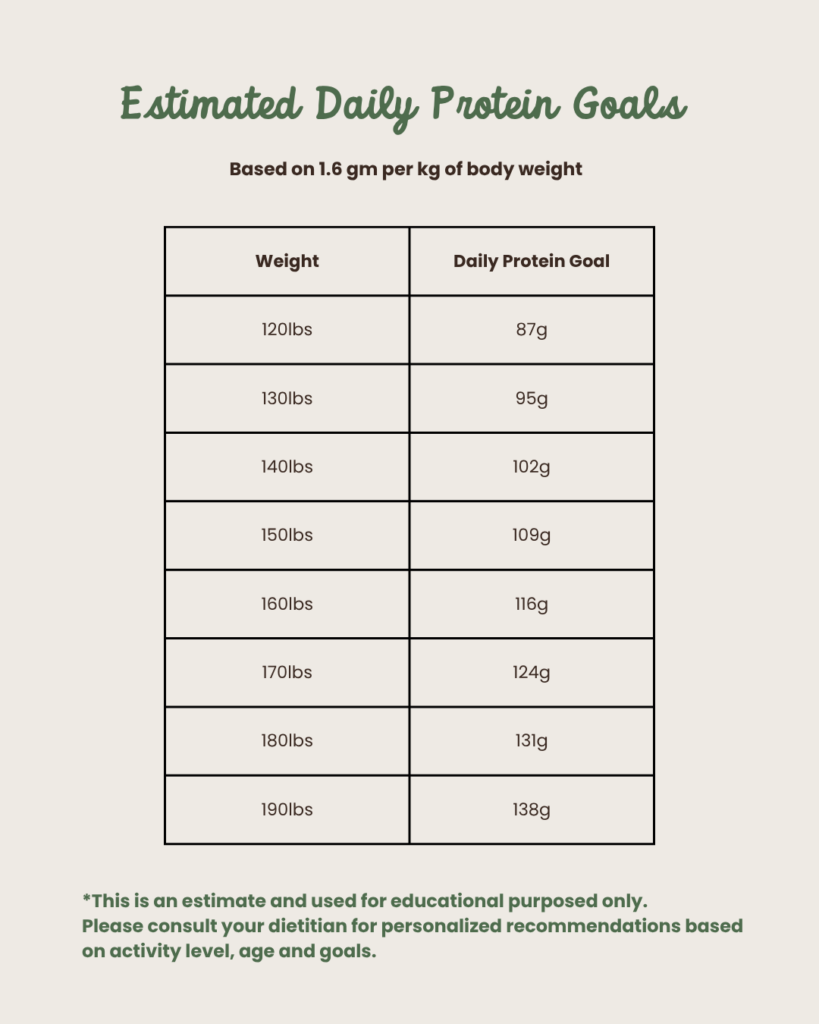
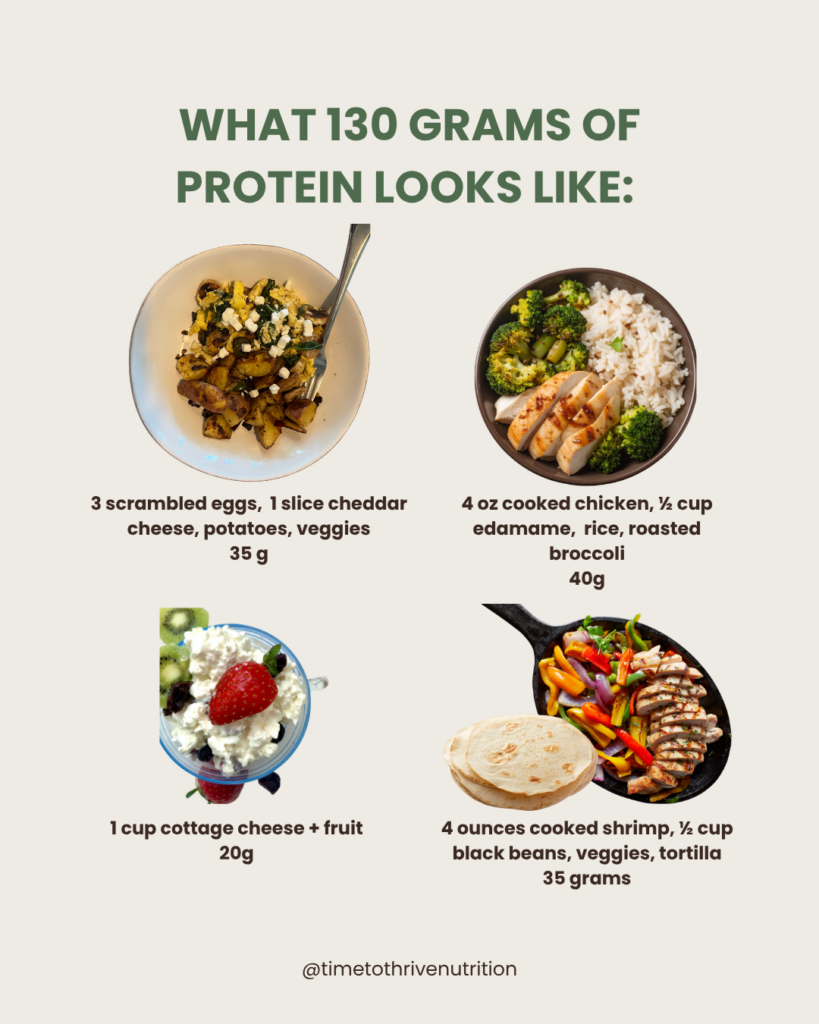
For most women over 35, a better target is ~1.6 grams of protein per kilogram of body weight goal. To calculate kilograms, divide your weight by 2.2. Most women need between 100-130 grams of protein, or about 25–35 grams per meal, with a 20 gram protein snack)
This supports:
- Muscle maintenance and growth
- Satiety (feeling full and satisfied)
- Stable energy throughout the day
It’s Not Just How Much.. It’s When
One of the biggest mistakes I see? Saving most of your protein for dinner. Your body utilizes protein best when it’s evenly distributed throughout the day.
Instead of:
- Light breakfast (coffee + carbs)
- Moderate lunch
- Protein-heavy dinner
Aim for:
- Protein at every meal (and even snacks)
This helps with:
- Reducing afternoon cravings
- Supporting workouts
- Maintaining lean muscle
Client Case Study: “I Was Doing Everything Right…Except Protein”
One of my clients, a 42-year-old busy mom and recreational runner, came to me feeling frustrated.
She was:
- Exercising consistently
- Eating “healthy”
- Still feeling tired, hungry, and stuck
When we looked closer, her typical day looked like this:
- Breakfast: toast + coffee
- Lunch: salad with minimal protein
- Dinner: balanced, but protein-heavy
She was only getting about 50–60g of protein per day, and most of it was at night.
We made a few simple shifts:
- Added a protein-rich breakfast (Greek yogurt + fruit + granola)
- Increased protein at lunch (chicken, tuna, or hardboiled eggs)
- Included a protein-forward snack- like cottage cheese with fruit or roasted edamame
Within a few weeks, she noticed:
- More stable energy (no afternoon crashes)
- Fewer cravings
- Improved recovery from workouts
- Gradual body composition changes without restricting food
No extreme changes, just more balanced protein intake throughout the day.
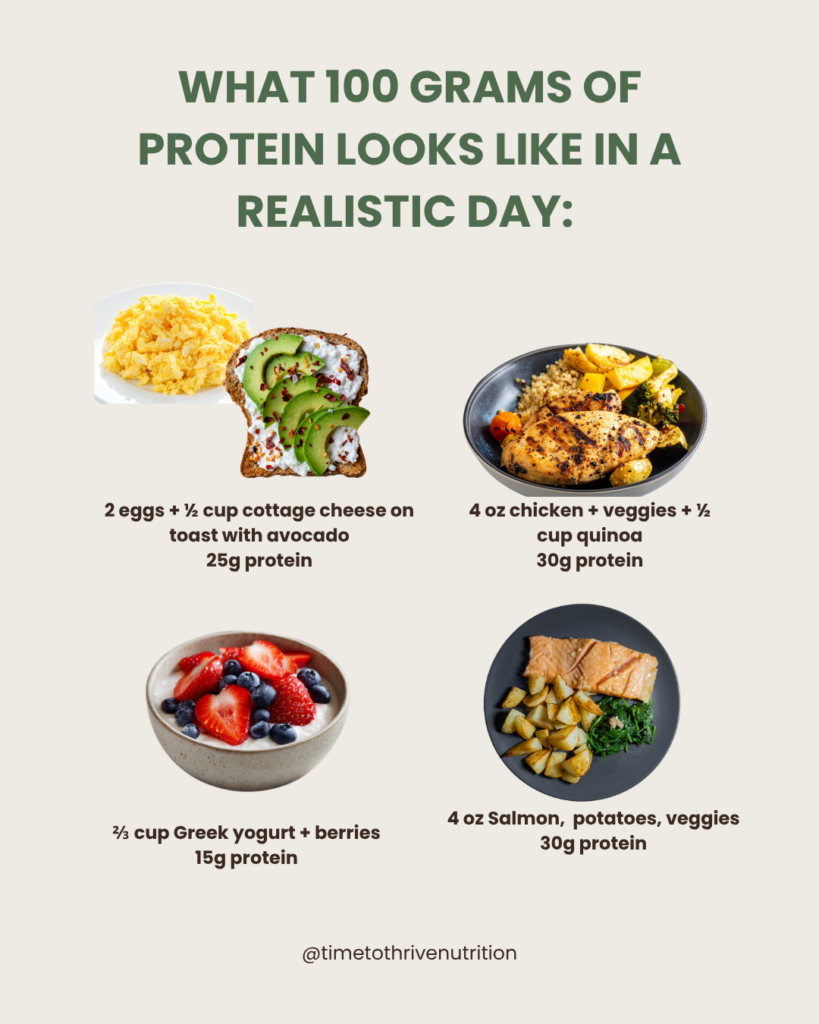
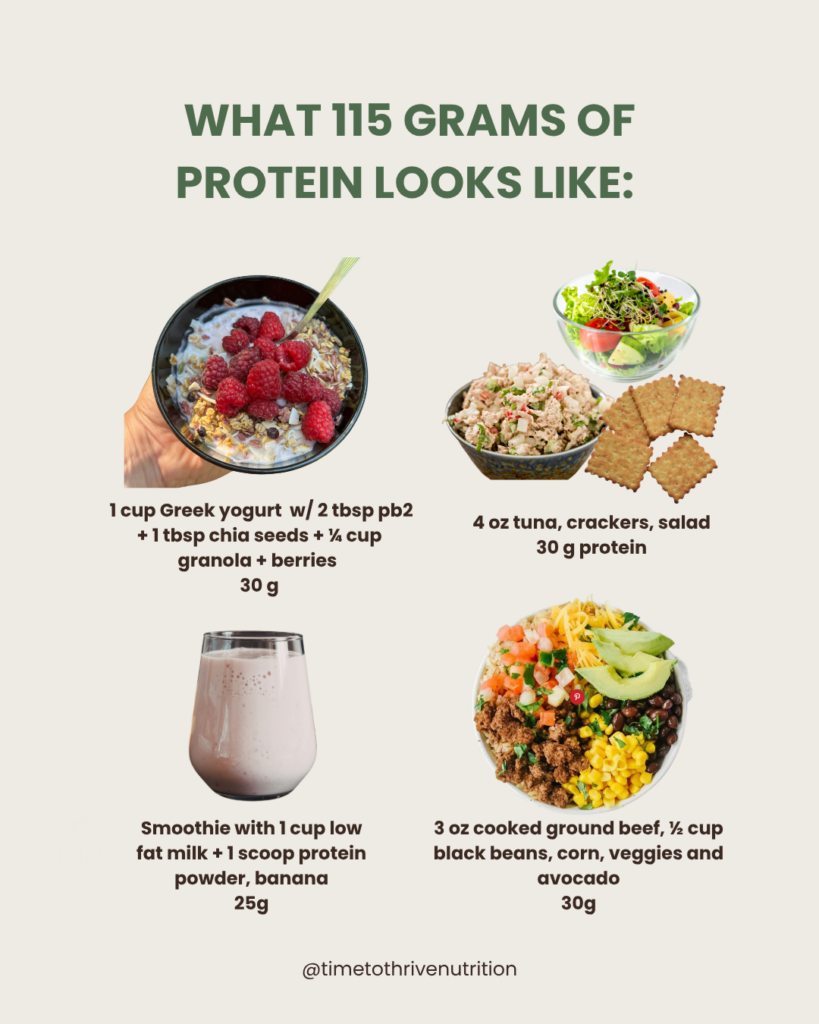
What Does 25–30g of Protein Actually Look Like?
Here are some simple examples:
- 2 eggs + ½ cup cottage cheese (scrambled)
- Protein smoothie with 1 cup greek yogurt + 1 cup Fairlife milk
- 4 oz chicken or turkey
- ¾ cup Greek yogurt + ¼ cup nuts/seeds
- ½ cup cottage cheese + 2 tbsp chia seeds
Protein doesn’t have to be complicated but it does need to be intentional.
Signs You Might Not Be Getting Enough Protein
- You’re hungry shortly after meals
- Energy crashes in the afternoon
- Difficulty building or maintaining muscle
- Cravings (especially for carbs/sugar)
- Hair thinning or brittle nails
Easy Ways to Increase Your Protein Intake
- Start with breakfast: Add eggs, Greek yogurt, or a protein smoothie
- Upgrade snacks: Pair carbs with protein (apple + peanut butter, crackers + cheese)
- Build your plate around protein first
- Prep ahead: Cook extra chicken, hard boil eggs, or keep protein staples on hand
The Bottom Line
Protein isn’t just for athletes. It’s essential for women who want to feel strong, balanced, and energized as they age. Small, consistent changes, like adding protein to breakfast or spreading it throughout your day, can make a big impact on how you feel. If you’re not sure where to start, or want a personalized plan that fits your lifestyle, we’re here to help.
At Time To Thrive Nutrition, we work with women to build sustainable habits that support strength, energy, and long-term health, without extremes.
- Fueling Families for a Successful School Year
- Fueling Birth and Beyond: Energy-Dense Meals & Snacks for Labor and Postpartum
- Summer Nutrition Tips from a Registered Dietitian: Eat Well, Feel Great All Season
- Perimenopause Nutrition: Key Changes to Make
- Boost Your Health: Protein Needs for Women Over 35
