

Potential Benefits of Creatine Supplementation for Active Women
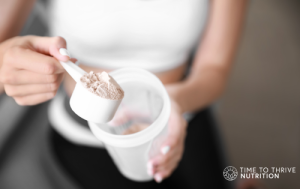
You may or may not have heard of creatine…
It has become a very popular supplement in recent years so you will often see social media dietitians and influencers posting about it. As you know, we are food first dietitians at Time To Thrive Nutrition so we are here to tell you if creatine supplementations are worth all the hype and what exactly the research supports in terms of potential benefits, type, dose, and timing.
Creatine is a non-protein amino acid and is stored mostly in the skeletal muscle with small amounts stored in the brain. It plays a key role in our bodies energy systems which provide energy for everyday activities as well as during exercise. Research has shown a myriad of other benefits to health creatine may provide which are detailed below.
Most people get creatine daily through their diet by consuming foods high in creatine like fish and red meat. In general these food sources of creatine provide about 1-2 grams of creatine per pound. Research on the performance and health benefits of creatine show that a dose of 3-5 grams per day is needed to reap many of these benefits. Thus for many individuals, especially those who limit or avoid fish and red meat, it can be very difficult to meet creatine needs through diet. This is where supplementation can be helpful. Most creatine supplements contain 3-5 grams of creatine per scoop. There are a few different forms of creatine supplements on the market however creatine monohydrate is the most studied , effective , and least expensive form of creatine. We only recommend this type of creatine supplement to clients.
Consuming creatine supplements have shown many potential health benefits. These potential benefits include:
- Increase in lean muscle mass when taken with a resistance exercise program
- Reduction in symptoms and improved recovery if a concussion/TBI is sustained while consuming the supplement
- Enhancement in muscle recovery from intense exercise
- Minimizing bone loss which occurs naturally as we age
- Improvement in brain function and improvement in mental tasks
Active women can benefit from all of the items listed above. Bone health in particular is one area where we see great potential for our female clients. As we detailed above, to reap the benefits of lean muscle mass gain and minimize bone loss, women need to be following a resistance exercise program along with consuming a creatine monohydrate supplement. Both men and women naturally lose bone as they age, however for women, this bone loss can outpace their male counterparts especially around menopause due to hormonal changes. There is great potential in the research showing that creatine monohydrate supplementation may help with this bone loss.
It’s most important to take creatine consistently every day.
Research has shown that the best timing with regards to taking creatine supplementation would be around exercise , either before or after. Consuming a creatine monohydrate supplement with at least 15 grams of carbohydrates can enhance absorption.
Now that we have discussed the research on creatine supplementation and shown that creatine monohydrate supplements may be a very effective and safe performance and health supplement, let’s talk about some ways it can be enjoyed in the diet, typically mixing it with a hot liquid allows for the best consistency!
Ways to include a creatine monohydrate supplement in the diet:
- Mix creatine monohydrate powder into morning coffee
- Mix creatine monohydrate powder into morning hot oatmeal
- Blend creatine monohydrate powder into a smoothie
- Mix creatine monohydrate powder into afternoon tea
- Add creatine monohydrate powder to soup or stew
If you are considering starting a creatine monohydrate supplement or any other supplement please reach out to a sports dietitian or your medical provide before starting!
References:
Kreider, R.B., Kalman, D.S., Antonio, J. et al. International Society of Sports Nutrition position stand: safety and efficacy of creatine supplementation in exercise, sport, and medicine. J Int Soc Sports Nutr 14, 18 (2017). https://doi.org/10.1186/s12970-017-0173-z.
[simple-photo-feed view=”3″]
